
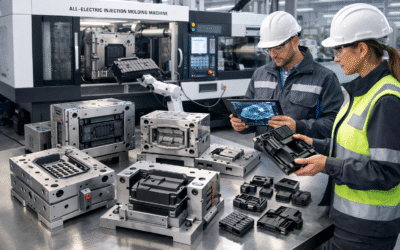
Medical device injection molding is a manufacturing process that produces parts by injecting material into a mold. Injection molding is used to develop components for medical instruments, diagnostic equipment, and devices such as surgical masks, drug delivery systems, and syringe barrels. As the demand for medical-grade plastic parts continues to rise with the aging population and advances in science and technology, injection molding will only become more important. medical device injection mold
Key materials and their importance:
- The molding process from start to finish
- Primary medical device applications
- Pros and cons
- Design best practices
- Regulatory and quality compliance
- Microfluidic molding and smart molds are future trends.
1. Basics of Medical Device Injection Mold
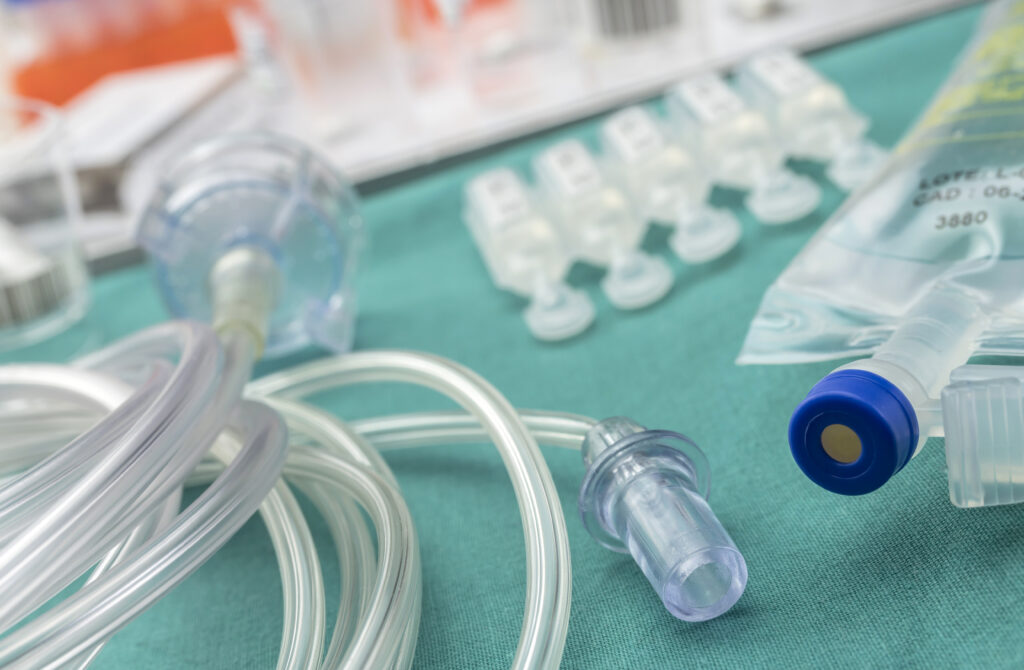
Medical device injection molding comprises a large part of contemporary medical manufacturing. Injection molding is an ideal method for producing high volumes of complex plastic medical components designed to be sterile and disposable, along with lower volumes of complex reusable devices. Injection-molded parts are solid, do not leak, and are complete, requiring no subsequent assembly. From the least invasive single-use products to the most invasive surgical implantable devices, all of these are formed through injection molding.
1.1 What is Injection Molding?
Injection molding is a manufacturing process in which molten plastic material is injected into a mold at high pressure. The plastic quickly cools and solidifies, releasing the finished part in seconds.
This process is used worldwide for manufacturing products ranging from precision parts to large components to consumer products. Manufacturers choose injection molding for its speed, repeatable performance, and ability to produce distinct plastic shapes with detailed features.
1.2 Core Components of the Process
To gain a better understanding of injection molding for medical devices, it’s helpful to break down the main elements that drive the process:
a) The Mold
It’s a precision-machined block of steel or aluminum, consisting of two halves (core and cavity), which forms the shape of the medical part and includes cooling channels, venting, and ejector pins.
- Single-cavity molds are suitable for low-volume productions or for parts with complicated designs.
- Multi-cavity molds are more efficient because they produce multiple parts at the same time.
b) The Resin
- Biocompatible—required because these are going inside someone’s head after all!
- Sterilizable—these come in contact with the bloodstream and many bodily tissues. They must be sterilized using autoclave, gamma, or ETO.
c) The Injection Molding Machine
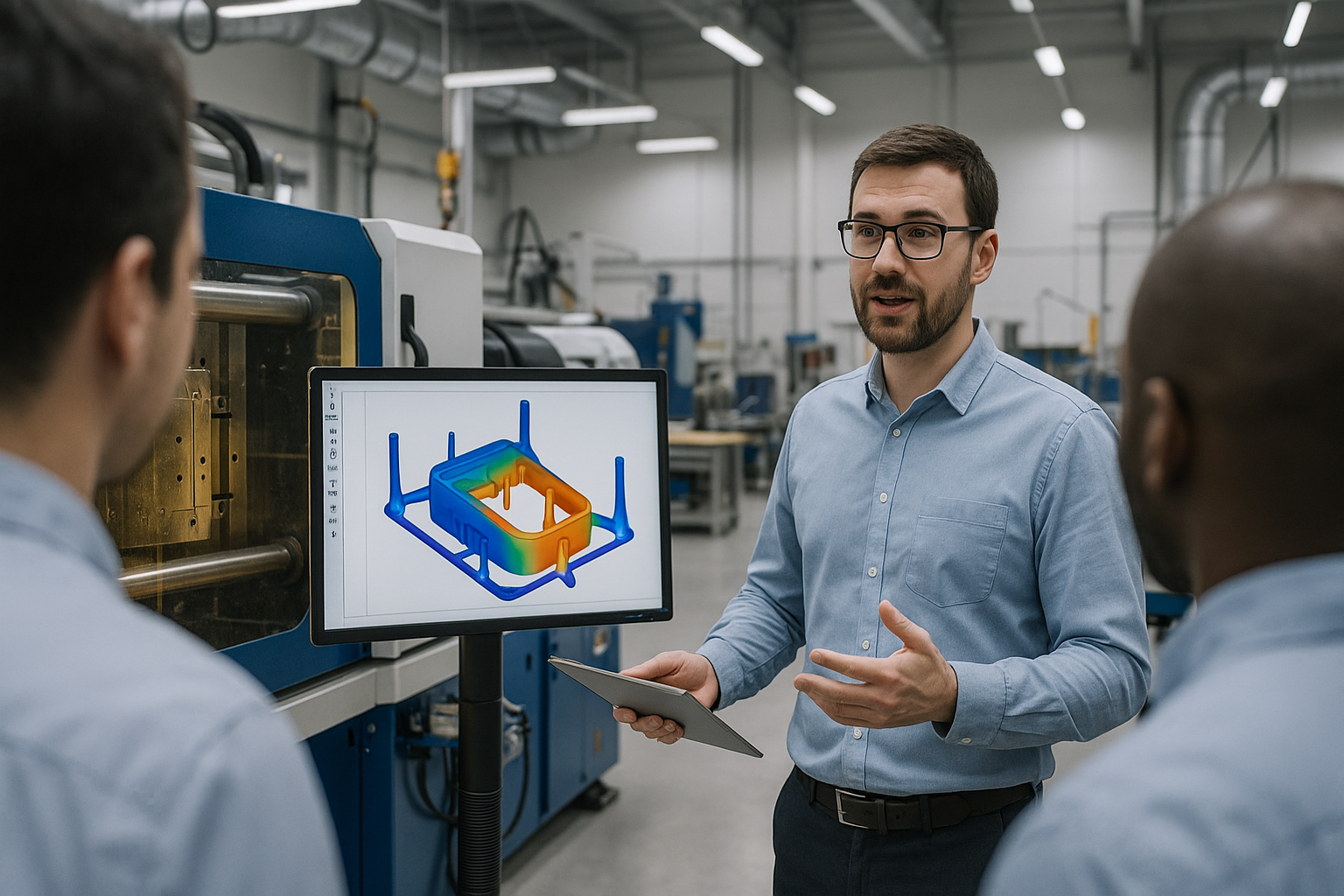
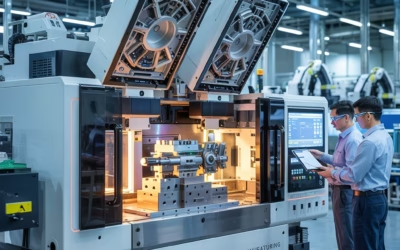
Modern machines are usually electric or hybrid machines that allow the control of temperature, pressure, and cycle time with high precision. This is a must for medical applications where consistency is not a topic for negotiation.

2. Benefits of Medical Device Injection Molds
Injection molding is a widely used method in medical device manufacturing. The process produces critical components that meet automation and high-volume production requirements of the healthcare industry with precision, repeatability, and low overall cost. Below are the main benefits. -2.1 High Precision and Tight Tolerances
2.1 High Precision and Tight Tolerances
One of the biggest reasons injection molding for medical devices is on the rise is its ability to produce intricately designed parts with precision and repeatability.
From Syringes to Implants: Typically, medical devices vary in terms of complexity, from simple in design—like syringes—to fully automated and involved systems meeting and exceeding the level of sophistication required by surgical instruments and implants.
Consistent Output: After you have a mold designed and it’s optimized, manufacturers can create those same units over and over at high volume with zero deviation.
2.2 Scalability & High Volume Production
Injection molding can produce massive quantities of identical medical items, which is why it is used for both disposable and reusable products. Millions of syringes, caps, vials, and testing cassettes can be made in a matter of weeks.
Example: Millions of syringes, caps, vials, and testing cassettes can be molded in weeks.
Fast Cycle Times: The process supports production speeds of one part per few seconds, depending on design complexity.
3. Medical‑Grade Plastic Materials Used in Injection Molding
Material selection in medical device injection molding is one of the most important factors affecting the performance, safety, compliance, manufacturability, and cost of the part.
Following are some of the most popular materials for medical injection molding:
3.1 Polypropylene (PP)
Why it’s used:
- Lightweight and chemically resistant.
- Autoclavable (can withstand steam sterilization).
- Low cost
- Available in medical grade (ISO 10993, USP Class VI)
Common Applications:
- Syringes and insulin pens
- Sample containers and test tubes
- IV connectors and caps
- Laboratory and diagnostic equipment housings
3.2 Polycarbonate (PC)
Polycarbonate is a thermoplastic that exhibits superior impact resistance and high-temperature performance, which are required in many of our products.
Why it’s used:
- High impact resistance
- Optical clarity
- Heat resistance (autoclavable grades available)
- Good dimensional stability
Common Applications:
- IV spike housings
- Surgical instrument handles
- Blood oxygenator parts
- Respiratory Components
3.3 Polyether Ether Ketone (PEEK)
PEEK is a bioinert high-performance engineered thermoplastic that resists reaction with most chemicals and bodily fluids. It is widely used where high mechanical and thermal properties are required.
Why it’s used:
- Exceptional Heat Resistance and Chemical Resistance
- High tensile and flexural strength
- Implant-grade available
- Gamma and autoclave sterilizable
- Bioinert
Common Applications:
- Orthopedic and spinal implants
- Handpiece
- Dental equipment
- Long-term implantable devices
✅ Conclusion: Shaping the Future of Healthcare with Medical Device Injection Molds
Injection molding for medical devices is not just a manufacturing process; it is the very foundation that supports innovation in the healthcare marketplace. As demands on the industry increase, so does the demand for mass-produced, low-cost, high-quality products.
Injection molding offers unparalleled production rates, repeatability, and cost efficiency, producing parts ranging from simple to highly complex with strengths equivalent to injection-molded alternatives. From short-term use diagnostic tools to high-performance long-term implantable components, medical-grade injection molding ensures all parts pass strict quality.
The fact that manufacturers can use a variety of medical-grade plastics—polypropylene, polycarbonate, PEEK—to develop lightweight, sterilizable, and biocompatible solutions is expanding the design freedom.



0 Comments