
The EV rapid prototyping industry is moving faster than ever before. New designs come out every year, all with different battery packaging, lighter parts, and smarter interiors. They can’t afford to wait months just for one part to be tested. No wonder rapid prototyping for EV has become a key philosophy for both OEMs and Tier-1 suppliers as well as new EV start-ups.
There’s one technology shift that quietly enables more speed and flexibility: modular tooling. Unlike traditional tooling, where modifying, swapping, or adjusting mold components means rebuilding the whole tool, modular tooling lets you do so quickly and easily. Pair this solution up with rapid prototyping such as injection molding and a fully electric injection molding machine; you’ll get an even faster development cycle on top of a cleaner process at a lower cost.
What Is Modular Tooling in Injection Molding?
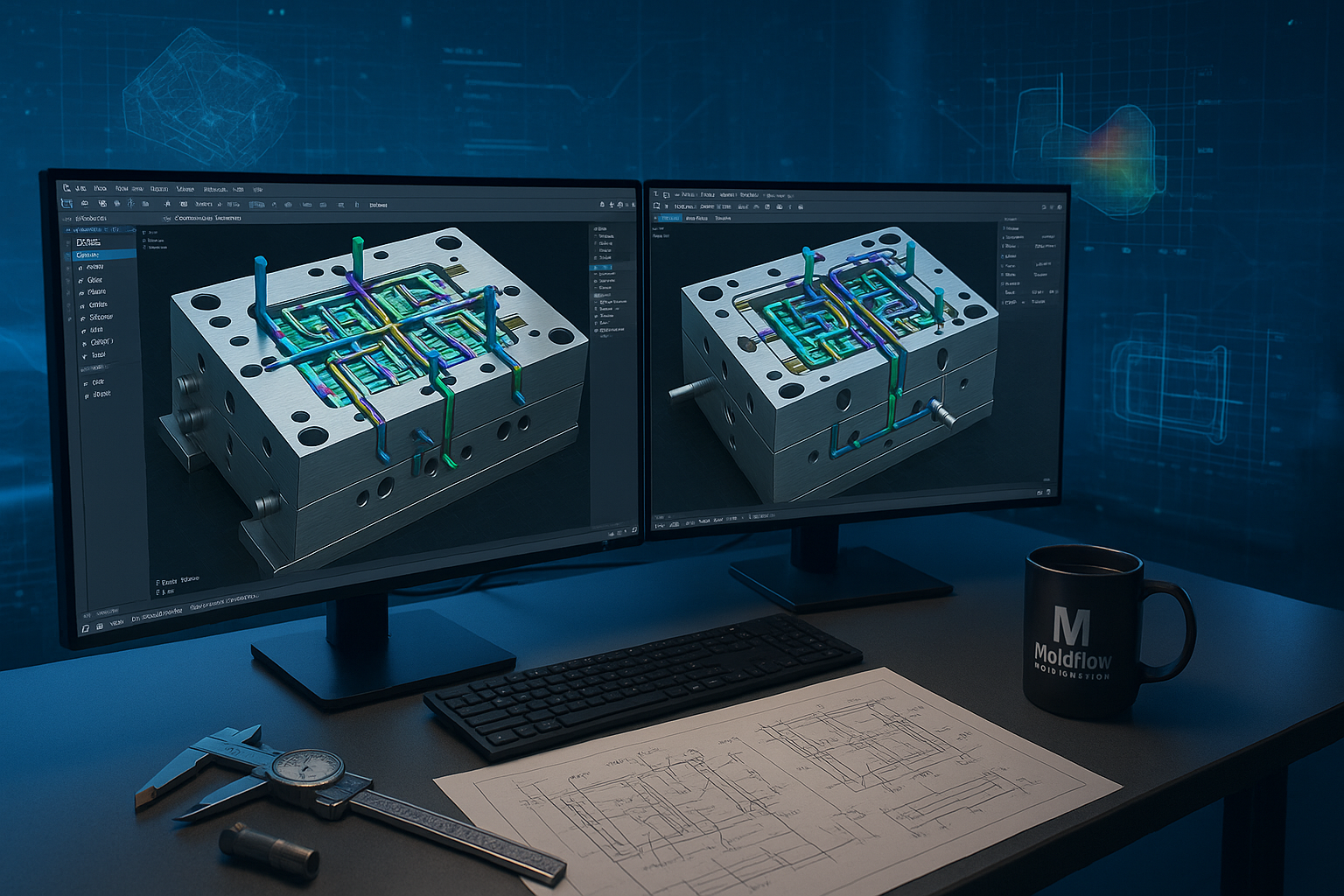
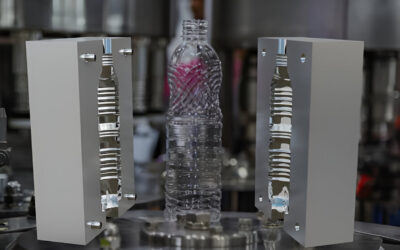
In simple terms, modular tooling refers to a mold that is built with separate sections that can be replaced, rather than one solid tool. It’s a bit like a “Lego-style” design where you only replace the piece of the mold that needs to be modified or repaired—like the cavity insert, core insert, gate insert, or slider module—not the entire tool.
A common modular plastic injection mold configuration includes
- Having a standardized mold base allows for replaceable cavity and core inserts to be used
- Interchangeable gate and runner modules
- Quick-change cooling or venting elements
- Alignment systems and locking mechanisms that are customary/standard
How Modular Tooling Accelerates EVs’ Rapid Prototyping
1) Faster Design Iterations Without Full Tool Rebuilds
Traditional tooling changes are also costly and time-consuming. If you have to change the position of a rib or update the design of a clip, for example, most OEMs are required to remachine large portions of the mold—and that can take weeks. With modular tooling, you can make changes in only specific inserts. You change one insert, place it in the existing mold base, and start production again. This makes rapid prototyping more feasible for intricate EV parts. You will be able to make multiple design iterations faster—and with less material scrap—overcoming one major challenge in EV development.
Reduced Cost Per Prototype Run in EVs Rapid Prototyping
In EV prototyping, you may need 3–10 iterations before the part design is frozen. If each iteration needs a new full mold, then the cost can be unbearable.
You only pay for:
- One Standard Mold Base (Reuse)
- Multiple Inserts (only if needed)
This reduces prototype tooling cost significantly, especially if you are developing multiple EV rapid prototyping components—like covers, brackets, sensor housings, clips, and interior parts.
3) Shorter Lead Time for Mold Manufacturing
Mold lead time is one of the biggest issues in product development. Traditional tools can take anywhere from 6 to 12+ weeks (depending on complexity).
Modular tooling can reduce that lead time because:
- Standard mold bases are readily or pre-machined
- Inserts are smaller and faster to machine
- Standard components are reused
- Assembly is quicker
4) Faster Design + Material Validation in EVs Rapid Prototyping
Parts required in EVs are material intensive. You can validate the below test:
- ABS, PC, PC/ABS, PA6, PA66
- Glass-filled nylons for stiffness
- Flame-retardant plastics for battery areas
- High-temperature plastics for thermal zones
The real behavior of a part also depends on molding conditions. For this reason, injection molding prototypes are usually more trustworthy than 3D-printed prototypes for final validation.
Why Fully Electric Injection Molding Machine Supports Faster Prototyping
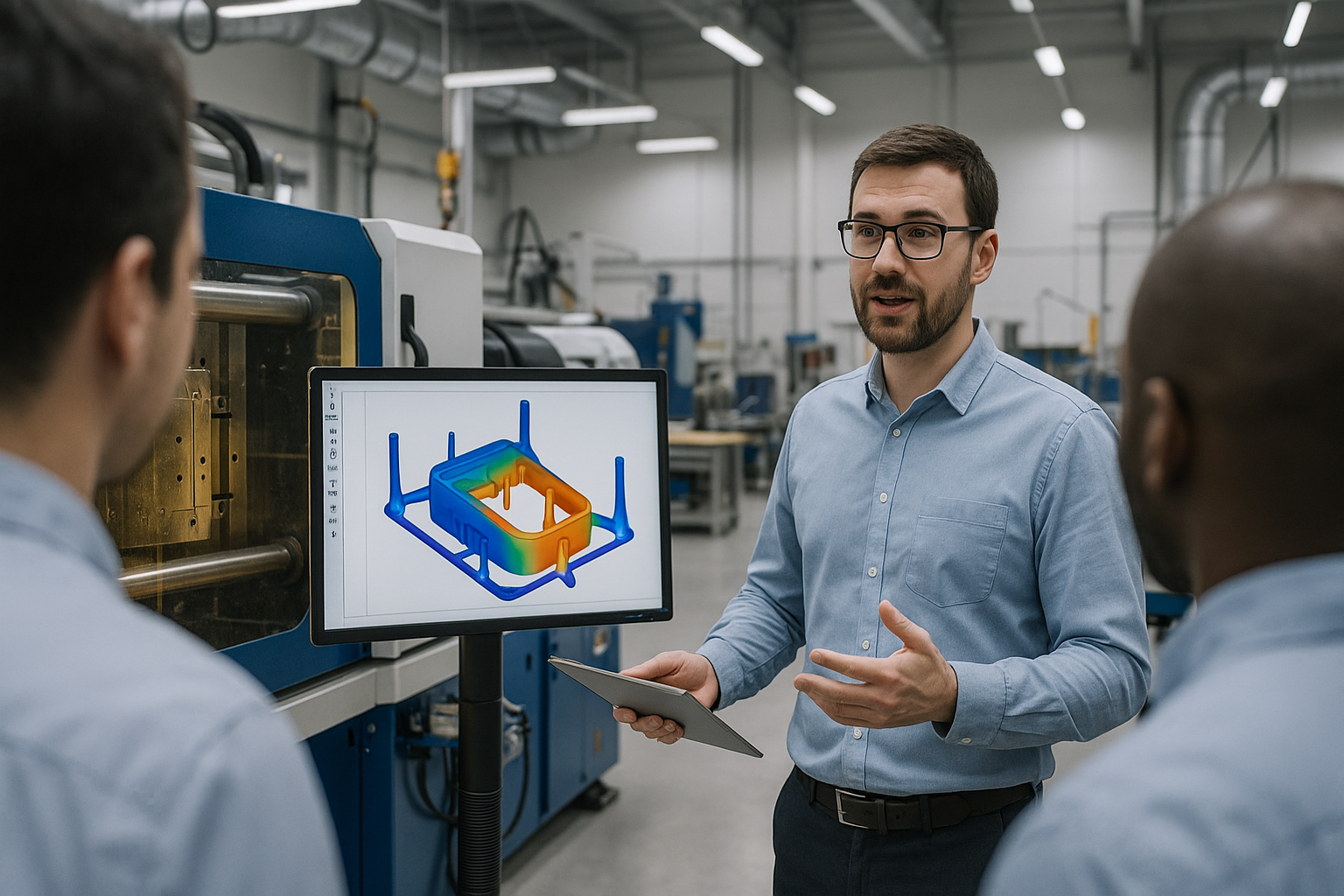
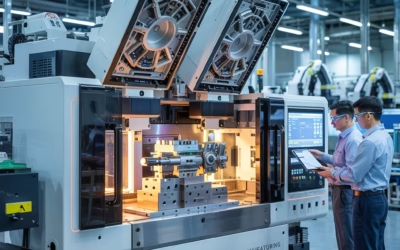
A fully electric injection molding machine is known for its precision, repeatability, and energy efficiency. Combine modular tooling with a fully electric injection molding machine, and prototype development becomes even smoother because:
- Shot-to-shot consistency is very high
- Repeatability of process parameters
- Variety in the part dimensions
- Faster start-up and stable cycles
- Cleaner operation (good for sensitive EV components)
For EV prototypes, precision matters a lot, especially for:
- Sensor housings
- Connector covers
- Battery-related plastic housings
- Clips and fastening components
- Interior fit and finish parts
How Plastic Injection Molding Services Support EVs’ Rapid Prototyping
A lot of EV rapid prototyping companies don’t make all the tools in-house. They use specialized plastic injection molding services that:
- Carry out tool design and machining
- Mold-making expertise
- Prototyping experience
- Process engineers
- Material sourcing
Quality measurement and testing support
High-quality suppliers will cast parts in accordance with the required technical specifications for sampling. Following production, plant metallurgists can also test samples from parts for analysis.
- Design inserts that are easy to swap
- Make sure you vent and cool correctly
- Minimize shrinkage and tolerance issues
- Get your prototypes faster with stable molding
Conclusion
As the electric vehicle market evolves at lightning speed, OEMs can no longer afford to be hamstrung by slow, inflexible development processes. Increasingly, EVS rapid prototyping is required to validate design intent, materials, and performance in the shortest possible time. In this context modular tooling emerges as a game-changer by injecting high speed, flexibility, and cost control right into the heart of EV product development.
Since modular plastic injection molds allow for fast changes via replaceable inserts rather than complete tool rebuilds, lead times and prototype costs drop substantially. But when rapidly produced through an additive approach such as 3D printing or soft tooling, this solution can accelerate results even more. Combined with processes such as injection molding—further improved with recent innovations like the Fully Electric Injection Molding Machine (FEIMM)—functional proto-parts are obtained early on in the process before product locking.
The resulting testing data generated give greater confidence over conventionally built equivalent parts, enabling greater design decision-making earlier than ever before.

0 Comments