
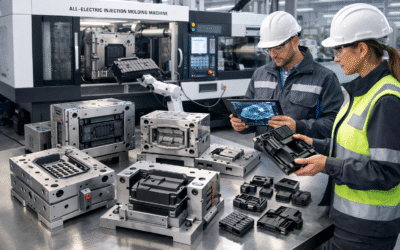
The world of fully electric injection molding machines has been evolving at a rapid pace in the last two decades. Manufacturers across the automotive, medical, electronics, packaging, and consumer goods industries are increasingly shifting towards faster, cleaner, and more efficient technologies.
In this comprehensive article guide, we will deliberate upon what a fully electric injection molding machine is and how it functions. What are its benefits and applications? And why has it become the preferred choice for demanding industries involved in precision plastic injection molds, plastic mold-making applications, and high-quality plastic injection manufacturing?
1. How Does a Fully Electric Injection Molding Machine Work?
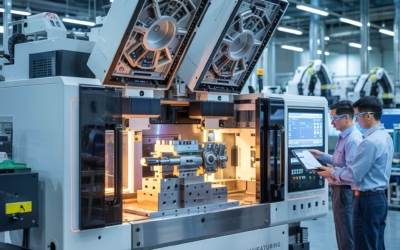
A fully electric injection molding machine is based on a highly controlled, fully servo motor-driven operation that replaces hydraulic systems, and to understand how it works, it’s important to first understand the basic process steps of plastic injection molding and what each electric motor does to achieve an overall cleaner, faster, and more energy-efficient injection molding cycle.
1.1 Raw Material Feeding & Plasticizing
At the beginning of the process, plastic pellets enter through the hopper and then move along toward the screw and barrel. In hydraulic machines, the power required to rotate the screw relies on hydraulic oil pressure. However, in a fully electric injection molding machine, there is a high-precision servo motor that rotates the screw itself.
What this achieves:
- More uniform melting
- Accurate heating control
- Better mixing of material
- Precise back pressure control
1.2 Mold Clamping with High Precision
Before the plastic melt is injected, the mold has to be closed hermetically. For hydraulic machines, clamping pressure will change because of oil temperature and pressure variation.
But in a fully electric injection molding machine, the mold is closed by a clamping servo motor, which closes the mold very smoothly and with precise force.
Advantages of electric clamping:
- Zero impact force (good for mold life)
- Accurate mold position monitoring
- Stable and repeatable clamping force
- Reduced wear and tear on expensive Plastic Injection Molds
1.3 Injection Phase—The Heart of the Process
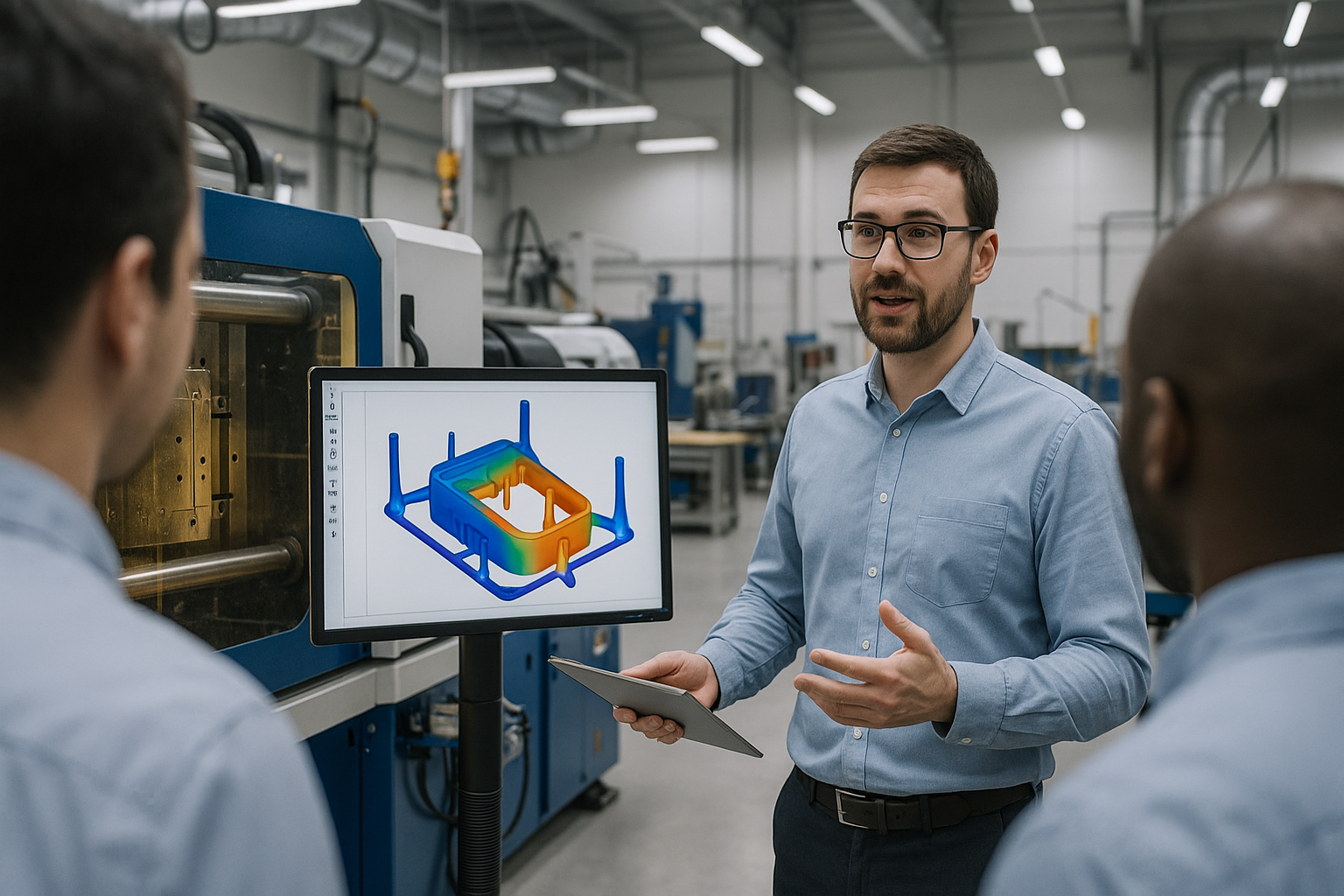
The injection phase is the most important step in injection molding. Here the component geometry, molten plastic temperature, injection speed, and pressure must be carefully controlled to produce a consistent quality part that has an acceptable surface finish, detailed dimensional accuracy, and reliable mechanical performance.
What makes electric injection superior:
- Faster response time
- Exact control over injection speed (multi-stage speed profiles)
- Precise control of injection pressure
- Accurate switchover from speed to pressure
- Extremely stable filling of each cavity
1.4 Packing & Holding Pressure
In fully electric machines, the injection unit is driven by a high-speed electric servo motor, which builds up this pressure and pushes the screw forward, injecting molten plastic into the plastic mold cavity.
Why electric injection is better:
- A quicker response time
- Precise control of the injection speed (multi-step speed profiles)
- Accurate injection pressure control
- Accurate speed-to-pressure changeover
- Extremely consistent filling of all cavities
2. Why Do Industries Prefer Fully Electric Injection Molding Machines?
Over the last years, manufacturing firms in the automotive, medical, electronics, packaging, and consumer goods industries have quickly moved from the vintage hydraulic systems to the fully electric injection molding machine. The below are the detailed reasons why industries today prefer a fully electric injection molding machine to realize high-quality part production using plastic injection molds/plastic molds and new-age plastic injection molding technologies.
A) Unmatched Precision, Accuracy & repeatability
One of the largest factors in choosing a fully electric injection molding machine is because they are SO accurate. Every single movement is controlled by electric servo motors, clamping, injection, plasticizing, and ejection—providing micrometer-level accuracy and consistent repeatability.
Why accuracy matters:
- Many industries demand the manufacturing tolerance within ±0.01 mm.
- For stable and vibration-free movement requirements of complex plastic injection molds.
- Electronic connectors and medical and optical parts cannot accept any variation.
- In multi-cavity plastic molds it is necessary that all cavities are filled equally.
B) Energy Savings Up to 70%
Energy efficiency is one of the biggest strengths of a fully electric injection molding machine. Hydraulic machines operate pumps continuously, in turn consuming energy unnecessarily, even during idle stages.
Also, once the fuel is burnt in an internal combustion engine, it releases its energy, which changes into kinetic energy to run the wheels. But electric machines operate on a demand-driven energy system, i.e., they consume power only when a motion takes place.
Power-saving advantages:
- No hydraulic pumps running 24/7
- Servo motors start and stop instantaneously
- Less heat is generated inside the machine
- Factory cooling requirement reduced
- Faster cycle times bring in more output so that companies can sell more
C) Faster Cycle Times Result in Higher Productivity
The faster the cycle time, the more parts are produced, and ultimately, the more money is made. A fully electric injection molding machine speeds up the process in several ways:
- Quick mold opening and closing
- Faster injection speeds
- Reduced cooling time
- Operations in parallel
- Increased production volume
- Shorter lead times
- More efficient plastic injection molding services
Our ability to handle large orders together with our competitive prices really sets us apart from the competition.
3. Key Components of a Fully Electric Injection Molding Machine
The fully electric injection molding machine consists of advanced components that work together to provide high precision, low energy consumption, and repeatable performance for the plastic injection molding process. Unlike hydraulic machines relying on pumps and oil pressure, a fully electric machine is constructed by using intelligent servo motors, advanced electronics, and highly accurate controlled mechanical assemblies, where each component contributes a vital characteristic to produce accurate and high-quality molded parts with the help of plastic injection molds.
3.1 Injection Unit
The injection unit is one of the most important parts of the machine because this is where raw material (plastic pellets) is being melted and pushed into the plastic mold.
Key function of the Injection Unit:
- Plasticizing the material by both shearing and heating that is achieved by a rotating screw
- Metering & injecting shot with repeatability, i.e., the same shot size every time for consistent plastic injection molding
- Injecting molten plastic into the Plastic Injection Mold with high speed and pressure
- Maintaining back pressure to ascertain uniform melt quality
Why it matters in a Fully Electric Injection Molding Machine
The screw rotation and injection movement are powered by electric servo motors, guaranteeing:
- Injection Extremely Accurate
- The melt temp is very stable
- A better distribution inside the mold
- zero delay during the movement
- Higher accuracy for precision plastic molds
3.2 Clamping Unit of Fully Electric Injection Molding Machine
The clamping unit is the part of the injection machine that keeps the mold closed when the injection molding process is running. It must be rigid enough to prevent mold opening due to the high pressure of molten plastic but also need mechanical flexibility to open and close many times.
Key components inside the clamping unit:
- Tie bars
- Moving platen
- Fixed platen
- Toggle mechanism or direct drive system
Role in molding:
- Closes the mold tightly
- Applies the clamping force to balance out the injection pressure
- It then releases the mold after everything was cool
- Ejection of finished parts, facilitated by electric clamping
Why electric clamping is superior
A fully electric injection molding machine uses servo-driven toggle mechanisms for:
- Super-fast mold open/close
- Smooth motion, no hydraulic shock
- Uniform clamping force
- Better Protection for Plastic Injection Molds
Conclusion
The revolution of modern manufacturing has been crystal clear; it is smart, efficient, and highly controlled technology that outperforms. As the market continues to expect faster output, higher part quality, lower scrap rates, and more environmentally friendly production processes, Fully Electric Injection Molding Machines (IMM) continue to prove themselves as the perfect solution.
With hydraulic power replaced by intelligent servo systems, a fully electric IMM offers unmatched repeatability/accuracy with minimal energy consumption when compared to any other pre-existing injection technologies in the industry. Every step of the fully electric IMM cycle, i.e., plastic-injection-clamping-ejection-mold open, is driven by an electrical motor, so it’s precise and predictable even for customers with strict tolerance requirements/multi-cavitation/high-volume producing needs.

0 Comments